
The federal economic forecast has just been released for the second quarter of this year and it doesn’t look good.
Many people don’t know that teams of economists work for weeks on this report by compiling and collating information from all relevant sources. The exact method of collecting this financial information is technical and complex so the quarterly forecast document provides this summary to explain the process in laymen’s terms:
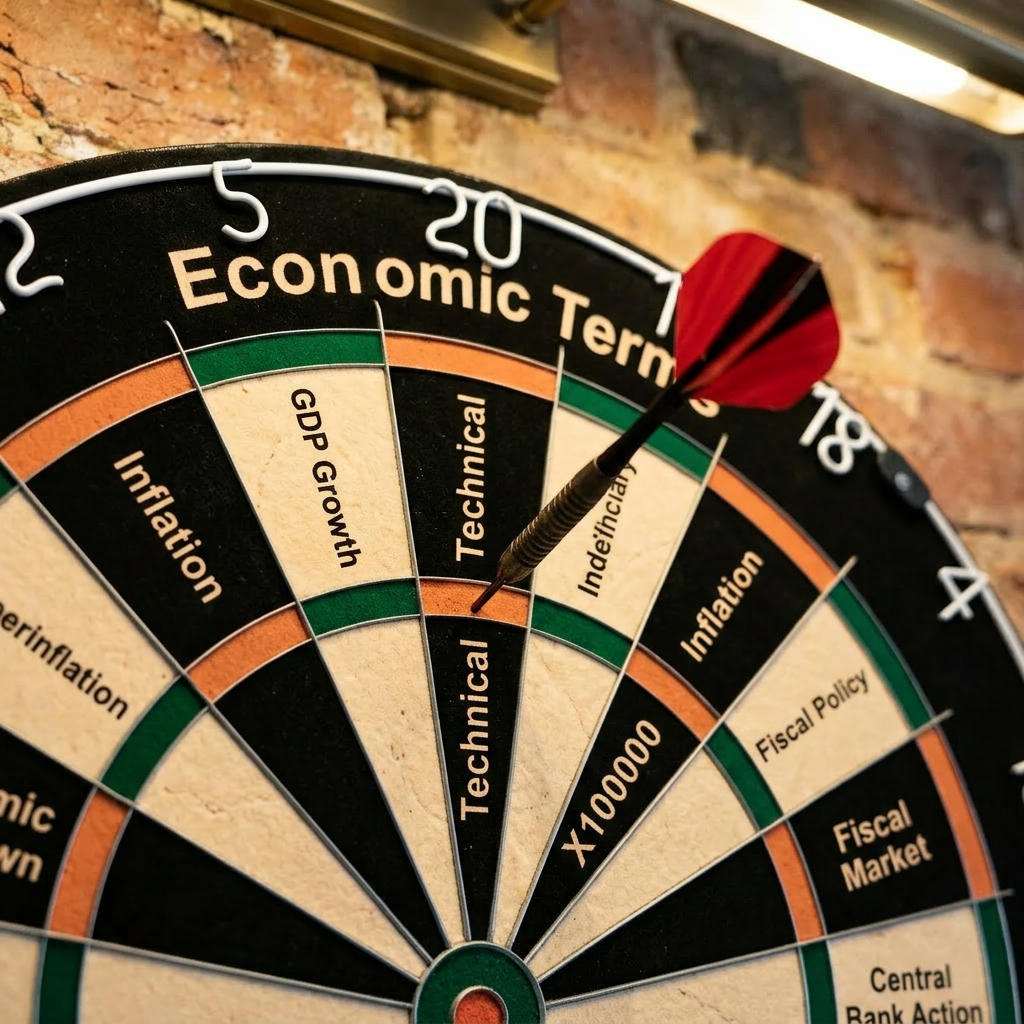
“Economists prepare the quarterly forecast by bringing together financial data from a vast array of both historical and real-time economic indicators. They also include statistical modeling, policy analysis and a review of government spending policies. This lengthy and data rich analysis is then balanced against where a dart lands on the Federal Economist’s Prediction Dartboard. (FEPD)”
In compiling research data for the past two quarters, economists found that inflation rates continued to outstrip wages and prices continued to spiral upward. By contrast though, they also found that the Federal Economic Forecasting Ouija Board was not spelling out RECESSION with any regularity. Two different data sources, two different results.
As is protocol, to confirm the accuracy of quarterly economic forecasts, a dart was then thrown the at the Economic Predictions Dartboard. But not just any dart thrown at any board. Economists ensure high scientific standards are adhered to when using the FEPC by using only dart throwers that are highly credentialed economists and only board-certified dartboards. In this case, the thrower was Spencer Fielding, the president of the committee that oversees federal economic forecasting known as the Society of Oversight Legislators or S.O.L
Just as economists had expected, the dart landed in the vicinity of a Recession. Economists were then confident in reporting a “technical recession” for the national economy for the next two quarters.
Leave a Reply